 Charming Ceylon
The one idea that makes the rest make sense
Almost every confusing thing written about Sri Lankan weather comes from treating the island as a single climate. It is not one. Two separate monsoons arrive at opposite ends of the country at opposite times of year, and the central mountains keep them apart.
- The Yala, or southwest, monsoon runs roughly May to September and brings rain to the west and south coasts and the western slopes of the hill country.
- The Maha, or northeast, monsoon runs roughly October to January and brings rain to the east and north.
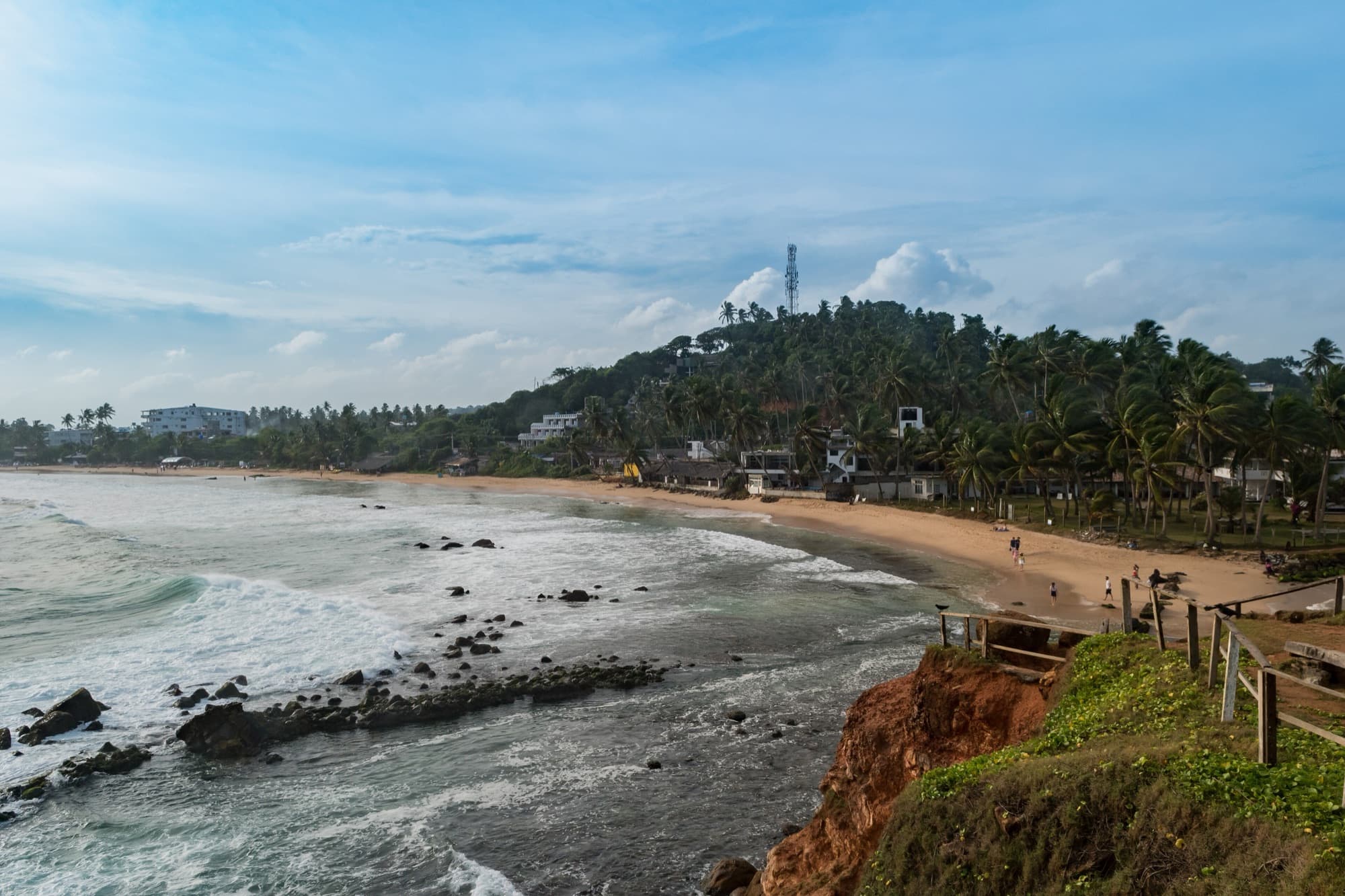
So while the south coast is being rained on in July, Arugam Bay on the east coast is in the middle of its best surf season, three hours away. And in January, when Mirissa is at its most glorious, Trincomalee is grey. The question is never whether to come to Sri Lanka in a given month. It is which half of the island to be on.
The two inter-monsoon periods — broadly October to November, and March to April — can produce afternoon thunderstorms anywhere on the island. They tend to be dramatic, brief and over by evening, rather than a washed-out day.
Month by month
| Month | Go here | Not here | Worth knowing |
|---|---|---|---|
| December | South and west coasts, Cultural Triangle, hill country | East and north | Peak season begins. Book well ahead; Christmas and New Year prices are the year's highest. |
| January | South and west coasts, Cultural Triangle | East and north | The best all-round month for the classic route. Driest in the south, clear in the hills. |
| February | Almost everywhere except the far east | East coast | Arguably the strongest month overall. Yala is excellent and the hill country is at its clearest. |
| March | South, west, Cultural Triangle, hill country | — | Hot, bright and settled. Good hiking visibility before the haze builds. |
| April | Most of the island | — | Sinhala and Tamil New Year falls mid-month and much of the country stops. Hot, with inter-monsoon storms. |
| May | East coast, Cultural Triangle | South and west turning wet | The southwest monsoon arrives. Prices in the south drop accordingly. |
| June | East coast, Cultural Triangle | South and west | Arugam Bay surf season proper. The dry-zone ancient cities are perfectly fine. |
| July | East coast, Cultural Triangle | South and west | Kandy's Esala Perahera usually falls in July or August. The elephant Gathering begins. |
| August | East coast, Cultural Triangle | South and west | Peak of the Gathering at Minneriya — the largest assembly of wild Asian elephants anywhere. |
| September | East coast, Cultural Triangle | South and west | The island's quietest month and its best value. Sites are noticeably emptier. |
| October | Transitional — nowhere is reliable | Most coasts | The wettest month island-wide and the one to avoid if you have no flexibility. Prices are lowest. |
| November | South and west returning | East | Storms easing, the south reopening, whale season starting at Mirissa. A quiet bargain. |
If you are coming for one particular thing
Wildlife and surf follow their own calendars, and they do not always agree with the weather one. If a single experience is the reason for the trip, build the dates around it and let everything else arrange itself.
| What you want | When | Where |
|---|---|---|
| Leopards | February to July | Yala — dry months concentrate animals at the waterholes. Wilpattu is a quieter alternative. |
| Elephants in numbers | August to September | Minneriya and Kaudulla, as the reservoir recedes. Udawalawe is reliable year-round. |
| Blue whales | November to April | Mirissa, on the south coast. |
| Blue whales, alternative season | May to September | Trincomalee, on the east coast. |
| Surfing, beginner-friendly | November to April | Weligama and the south coast breaks. |
| Surfing, the famous point break | May to September | Arugam Bay, on the east coast. |
| Hiking and clear mountain views | January to March | Ella, Horton Plains, Knuckles. Get to World's End before 9am or the cloud closes in. |
| Adam's Peak pilgrimage | December to May | The steps are lit and the route busy only during the season; outside it the climb is unsupported. |
Festivals, and the days things close
Sri Lanka's calendar runs partly on the lunar month, so the following move each year. Confirm the dates before you plan a trip around one.
- Poya — every full moon is a public holiday. Liquor sales are officially suspended, bars and shops close, and many hotels will not serve alcohol. Not an obstacle, but worth knowing if it lands on an anniversary dinner.
- Sinhala and Tamil New Year, around 13–14 April — the biggest holiday of the year. Much of the country shuts for several days, domestic transport is overwhelmed, and some businesses close for a week. Extraordinary to witness and genuinely difficult to travel through.
- Esala Perahera, Kandy, July or August — ten nights of caparisoned elephants, fire dancers and drummers. One of Asia's great processions. Kandy accommodation sells out months in advance and prices roughly double.
- Vesak, the May full moon — lanterns in every street and free food stalls, or dansal, set up by families along the roads. Quietly the loveliest few days in the calendar.
- Deepavali, October or November, and Christmas, both widely observed on an island where four religions share the public holidays.
The shoulder-season sweet spots
If you can move your dates by a fortnight, three windows give you most of the weather at a good deal less of the cost and crowding.
- Late January into early February — peak-season weather on the south coast once the Christmas rush has cleared out.
- September — the east coast at its best, the ancient cities dry, the elephant Gathering still running, and the lowest visitor numbers of the year.
- Late November — the southwest has dried out, whale season is opening at Mirissa, and December's prices have not arrived yet.
The one month to be wary of is October. It is genuinely unsettled almost everywhere, and while it is cheap, a fortnight of it can be a disappointing way to see the island for the first time.